How Much Will Dubai Property Prices Rise in 2026?
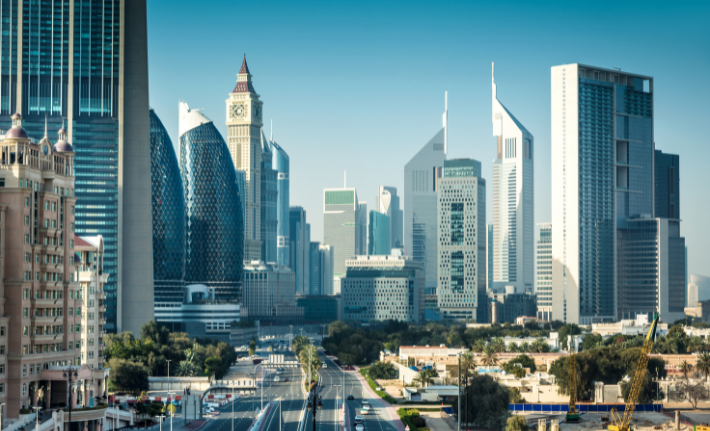
Dubai residential price growth is forecast to slow to 10 per cent in 2026, while office capital values and rents are set to rise 15 per cent.

UAE News:
Dubai residential price growth is forecast to slow to 10 per cent in 2026, while office capital values and rents are set to rise 15 per cent.
Who has access
UAE banking sector has continued to grow: Data show increases in money supply (M2 grew by 2% YoY in November vs October’s 14.8%) and banking assets (0.8% MoM to AED 5.25trn) driven by rises in deposits and credit, reflecting expanding economic activity. UAE deposit growth, at 13.7% year-to-date (YTD) in Nov, outpaced domestic credit growth (10.6% ytd) but was lower than gross credit (16.1%, which includes foreign credit). Deposits grew thanks to the resident private sector (17.4% YTD) while domestic credit was driven by upticks in retail private sector (15.7% YTD) & government (18.9% YTD).
The UAE and the Philippines have formalised a Comprehensive Economic Partnership Agreement (CEPA), a broader bilateral trade and investment framework that reduces barriers and enhances market access for goods and services. The UAE is the Philippines’ top export market among Arab and African nations and its 17th largest global trade partner. Bilateral non-oil trade stood at USD 940mn in 2024 and grew 22.4% YoY to USD 853.7mn in January-September 2025. By strengthening supply-chain linkages, particularly in services, investment and trade facilitation, the agreement is expected to accelerate growth and deepen economic integration.
Nigeria and the UAE signed a CEPA last week: the deal will eliminate tariffs on over 7,000 product lines (from seeds & oils to pharmaceuticals, chemicals and agricultural produce), significantly lowering export costs and enhancing competitiveness. Nigeria’s minister also revealed that the deal will allow Nigerian businesses to set up offices and subsidiaries in the UAE. The deal underscores the UAE’s role as a gateway for trade into Africa and the expanded market access will benefit exporters, manufacturers and service providers in both economies.
Canada and the UAE are set to launch negotiations on a CEPA next month, building on existing bilateral trade and investment linkages, including a recent USD 50bn investment commitment by Abu Dhabi in areas including energy. Negotiations with the UAE represent Canada’s strategic diversification of trade partners beyond traditional markets (such as the US due to Trump’s tariffs).
Despite geopolitical tensions, the UAE’s DP World reaffirmed that operations at the Berbera port in Somaliland continue unaffected, underscoring the durability of commercial logistics investments even against political headwinds. The port, a key component of regional trade connectivity, plays an important role in linking Horn of Africa markets to global routes.
Dubai’s Roads and Transport Authority confirmed that electric air taxis (developed with Joby Aviation) are set to begin commercial operations by the end of 2026. These zero-emission aerial vehicles are designed to integrate with the city’s transport network and reduce congestion, underscoring a leap in urban mobility innovation and diversification of transport infrastructure.
MENA News:
According to the latest World Bank Global Economic Prospects outlook, the GCC is forecast to grow by 4.4% in 2026 and accelerate slightly to 4.6% in 2027, highlighting robust performance relative to slower global growth expectations (2.6% in 2026). This reflects growth in diversified non-oil sectors (such as services, trade and tourism) despite persistent global uncertainties, including geopolitical tensions and trade frictions.
President Trump announced that any country doing business with Iran would face a 25% tariff on all trade with the US, signalling an aggressive extension of US trade policy to penalise third-party economic engagement with Iran. Major trade partners of Iran, including China, Turkey, Iraq, India and the UAE, could see heightened uncertainty about access to the US, complicating global supply chains and investment planning.
Bahrain’s Telecommunications Regulatory Authority has authorised Sama X to roll out Starlink satellite broadband services in the country, expanding high-speed connectivity for businesses, government and maritime users.
The investment and foreign trade minister of Egypt disclosed that the country recorded the highest tax revenue in two decades, driven by broader tax base expansion and tax reforms, including stronger compliance measures.
Egyptian startups secured USD 614mn in funding in 2025, up 51% YoY, and the government is preparing fresh incentives to further catalyse innovation, investment and job creation in the private sector, including a “Startup Charter” and unified investment incentives.
Egypt announced the discovery of four new oil and gas fields in the Western Desert, strengthening its hydrocarbon resource base. These wells are expected to have a daily production capacity of nearly 4,500 barrels of crude oil and 2.6mn cubic feet of natural gas.
Egypt plans to increase the sports sector’s contribution to GDP to 3% by 2032, more than double its current share (of 1.34%), by expanding the number of sports services companies (to 4500 from around 600) and commercialising the industry.
The Ministry of Transport, Communications and Information Technology in Oman disclosed that its digital economy attracted USD 3.1bn in investments over the past five years (with 70% driven by FDI) and the logistics industry saw an investment of USD 8.8bn by end-2025, reflecting strategic priorities in technology, innovation, and knowledge-based sectors.
Inflation in Qatar inched up to 1.95% in December (November: 1.38%), with core price movements influenced by food, housing and utilities.
According to MAGNiTT, the MENA venture capital market continued to gain traction in 2025, with funding up 145% YoY to USD 1.72bn from 257 deals (+45%) across sectors such as technology, fintech, health tech and digital services. Saudi Arabia was the most active, raising USD 3.43bn in funds (+89%) and transactions up 13% to a record 581.
Qatar and the UAE joined the US-led Pax Silica initiative, aligning itself with major technology economies to strengthen AI and semiconductor supply chains – critical areas of future economic competition. Participation signals widening strategic economic cooperation with the US and partners such as Australia, UK and Japan, particularly in logistics, industrial capacity, and energy. A senior official disclosed that a very substantial bilateral AI deal had been negotiated with Saudi Arabia.
Saudi public investment fund assets expanded robustly, up 5.7% QoQ and 36% YoY to SAR 217.9bn by Q3 2025, underpinned by strong domestic investment and sector diversification. Growth was driven chiefly by a rise in assets of local funds (39% YoY to SAR 186.9bn), while foreign fund assets also climbed (21% to SAR 31.1bn), indicating widening investor confidence and diversification of investment instruments.
The Saudi mining minister disclosed that the Public Investment Fund (PIF) is planning to spin off Manara Minerals to sharpen its focus on technical mining capabilities beyond pure investment activity, though no timing was provided on the spin-off. This repositioning underpins Saudi’s aim to capture value across the mining value chain versus merely holding equity stakes and will enable greater integration into global supply chains for clean-energy and EV-related minerals.
Total foreign investment stock in Saudi Arabia reached nearly SAR 977bn, revealed the Minister of Investment. He also stated that FDI inflows have doubled since Vision 2030 reforms began, driven by liberalisation of markets and stronger trade ties. Policies such as easing foreign access to capital markets, opening the real estate sector and expanding bilateral investment frameworks are reinforcing these trends.
Saudi Arabia’s Ministry of Industry and Mineral Resources issued 138 new mining licenses in November (taking the total to 2,719 as of November), reflecting its structural diversification strategy and building on a record increase in exploration activity during 2025. Concurrently, the Future Minerals Forum concluded with the signing of over 132 agreements and MoUs worth SAR 100bn across the mining value chain, underlining strong international interest and government support for critical minerals.
Global News:
Equity markets were mixed last week, with declines in major indices in the US (despite strong tech and finance earnings) and China declining. Regional markets were also mixed, given geopolitical tensions (news that the US pulled personnel from bases in the Middle East) and some profit taking; Dubai and Abu Dhabi were up more than 1% from the week before, while Qatar’s main market climbed to above the 11,000 level. The dollar index climbed to a 6-week high on Thursday while the JPY strengthened (from an 18-month low versus the USD) on comments from the finance minister that the country would “not rule out any options” to support the JPY. Oil prices edged up on supply fears (protests in Iran and President Trump’s hints of a potential military intervention) while gold prices reached a record USD 4,642.72 on Wednesday before edging lower, while silver prices hit an all-time high of USD 93.57 (posting a 10%+ weekly gain).
About Business Exchange Bureau:
Business Exchange Bureau (BXB) is a Professional Marketplace for Business Owners to Buy and Sell Businesses, Investments or Business Assets in the UAE.
The BXB vision is clear - to connect great business minds to great investments.
SOURCE:
Nasser Saidi & Associates